Using Finance Book for Asset Depreciation
Imagine Nova Industries must report a machine one way in its statutory accounts, but management wants a second view for internal planning. The law may allow a ten-year useful life, while managers may prefer five years because they expect to replace the machine sooner.
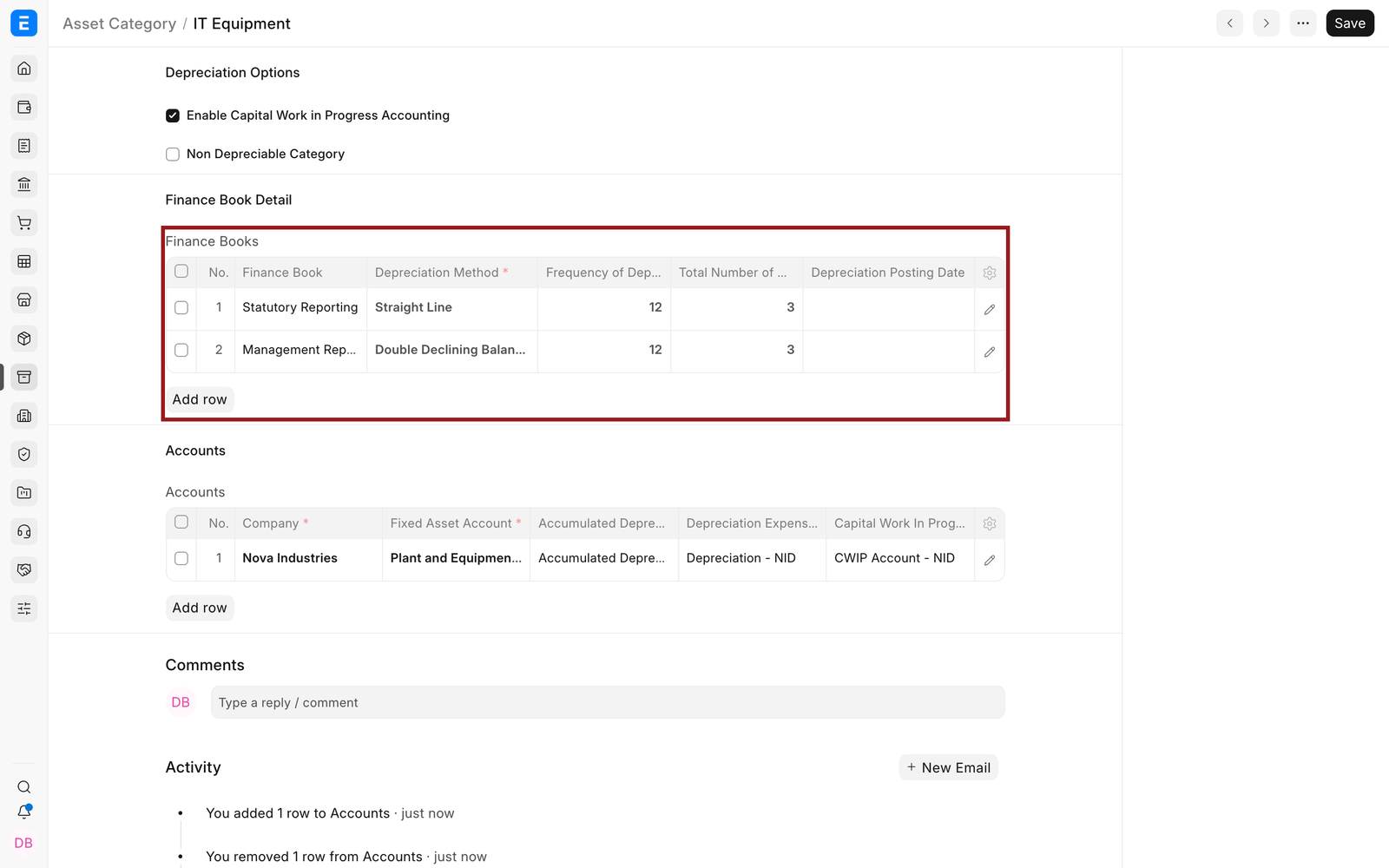
Finance Books allow both views to exist without changing the original asset cost. EnigmaERP can keep a separate depreciation schedule for each book, so the finance team can compare statutory reporting with its internal view.
Configure Finance Books#
Create each Finance Book and add its depreciation policy to the Asset Category.
Apply them to an Asset#
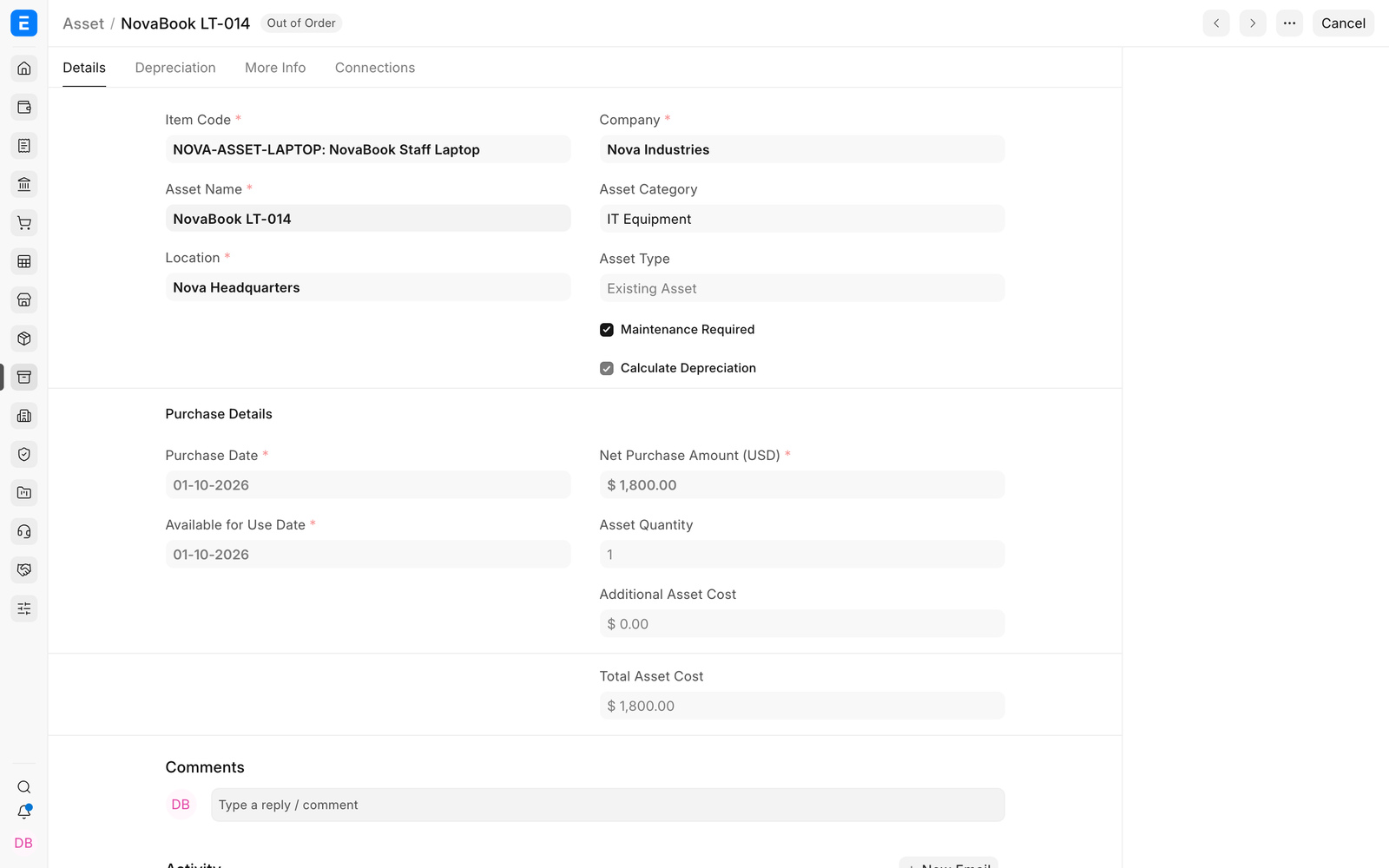
Review the rows copied to the Asset. Each row can use its own method, frequency, useful life, residual value, and start date.
Report by Finance Book#
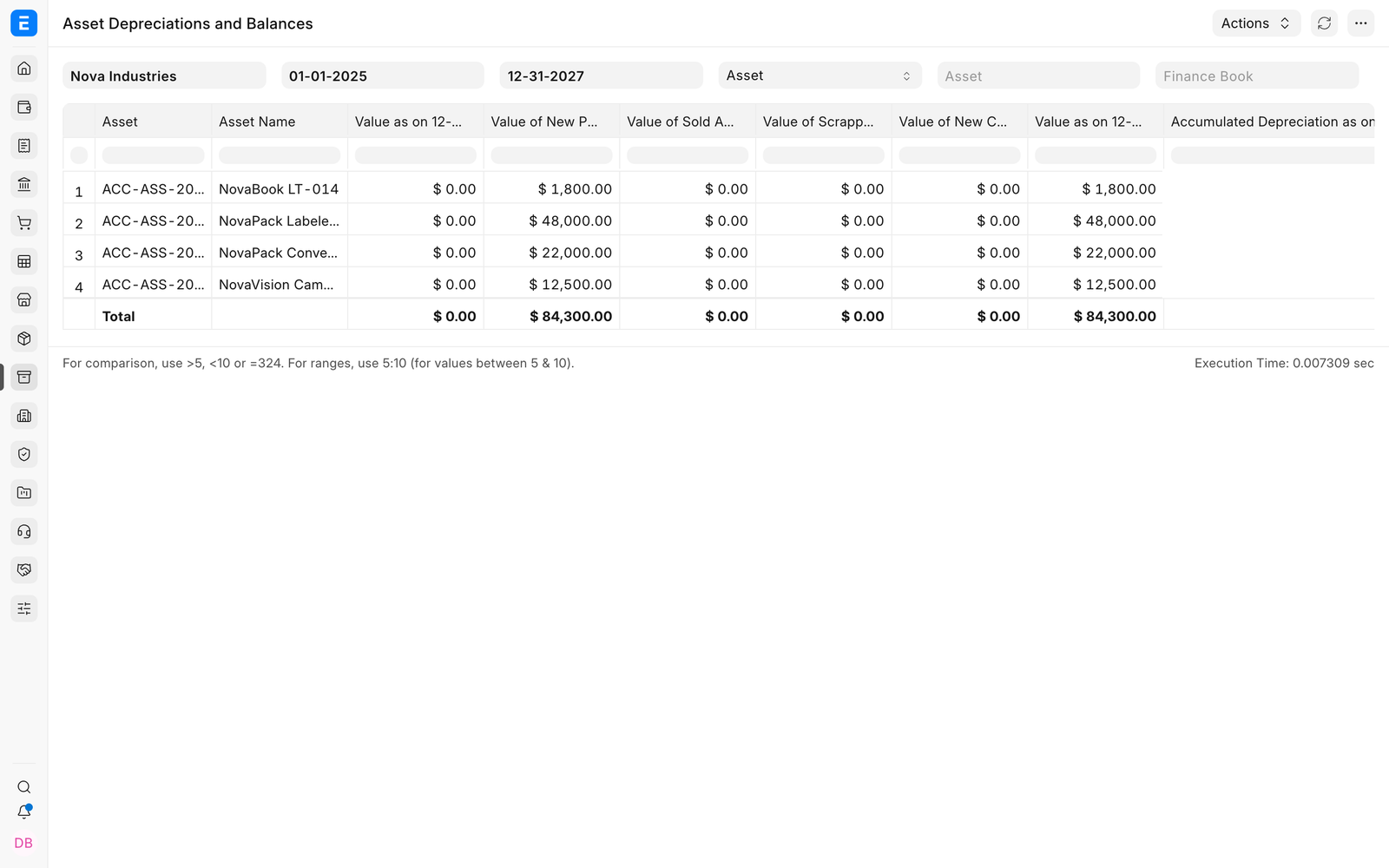
Select the intended Finance Book in asset and accounting reports. Leaving the filter blank can include default-book behavior and may not answer a policy-specific question.
Troubleshooting#
A report shows the wrong depreciation values#
Check the report's Finance Book filter and whether Include Default Finance Book Assets is enabled.
Only one schedule exists#
Confirm the Asset contains a complete row for every required Finance Book before submission.
Frequently asked questions#
Does a Finance Book create a separate asset?#
In EnigmaERP, no. It creates a separate accounting schedule for the same Asset.
Can Finance Books use different methods?#
In EnigmaERP, yes. That is one of their main purposes.
Which Finance Book posts by default?#
The company or transaction defaults determine the default view. Always set an explicit filter when validating a specific reporting basis.
Related topics#
- Asset Category
- Asset Location
- Asset
- Purchasing an Asset
- Depreciation
- Asset Movement
- Asset Repair
- Asset Reports